(( Photo by Leah Wendzinski ))
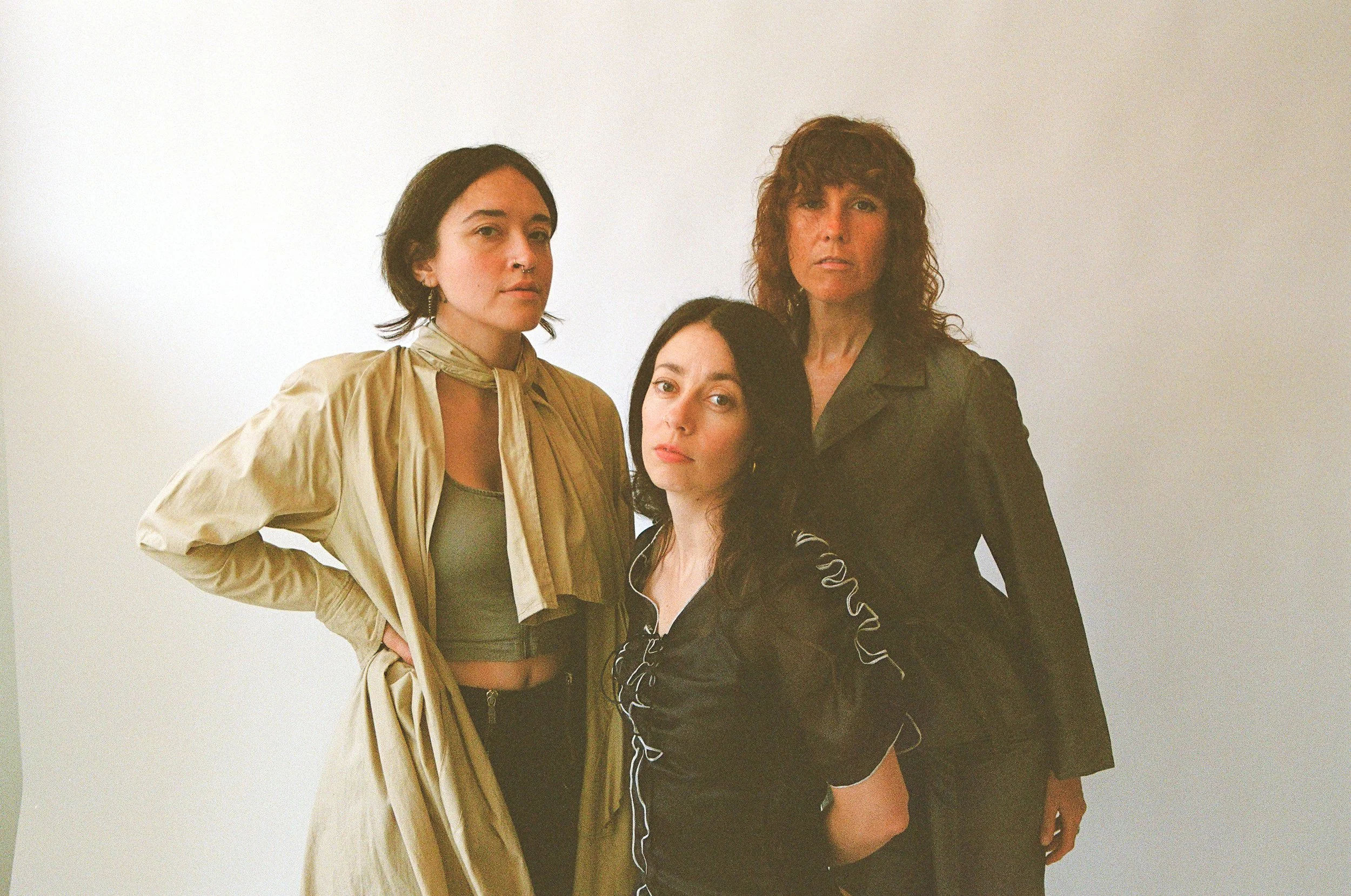
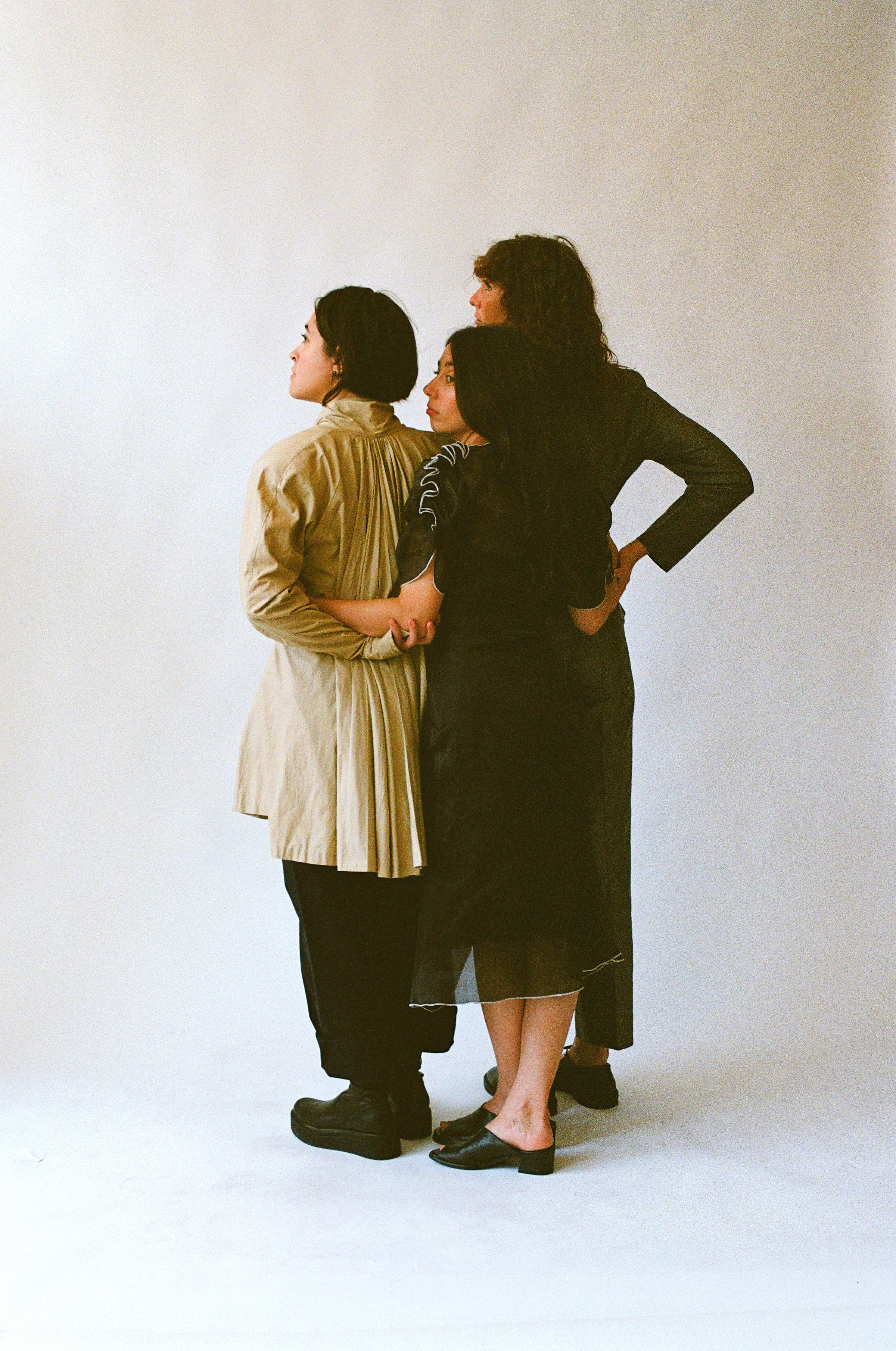
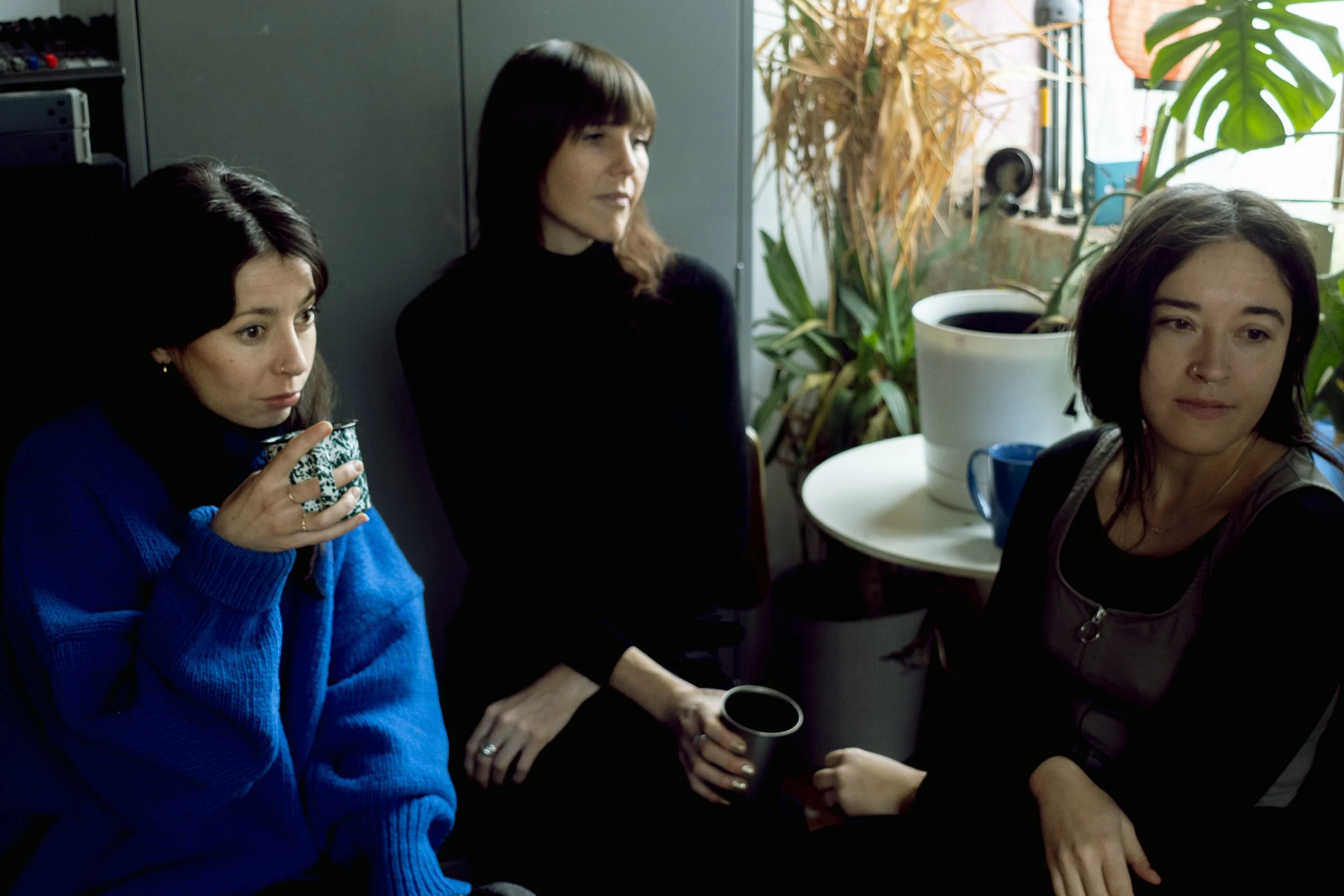
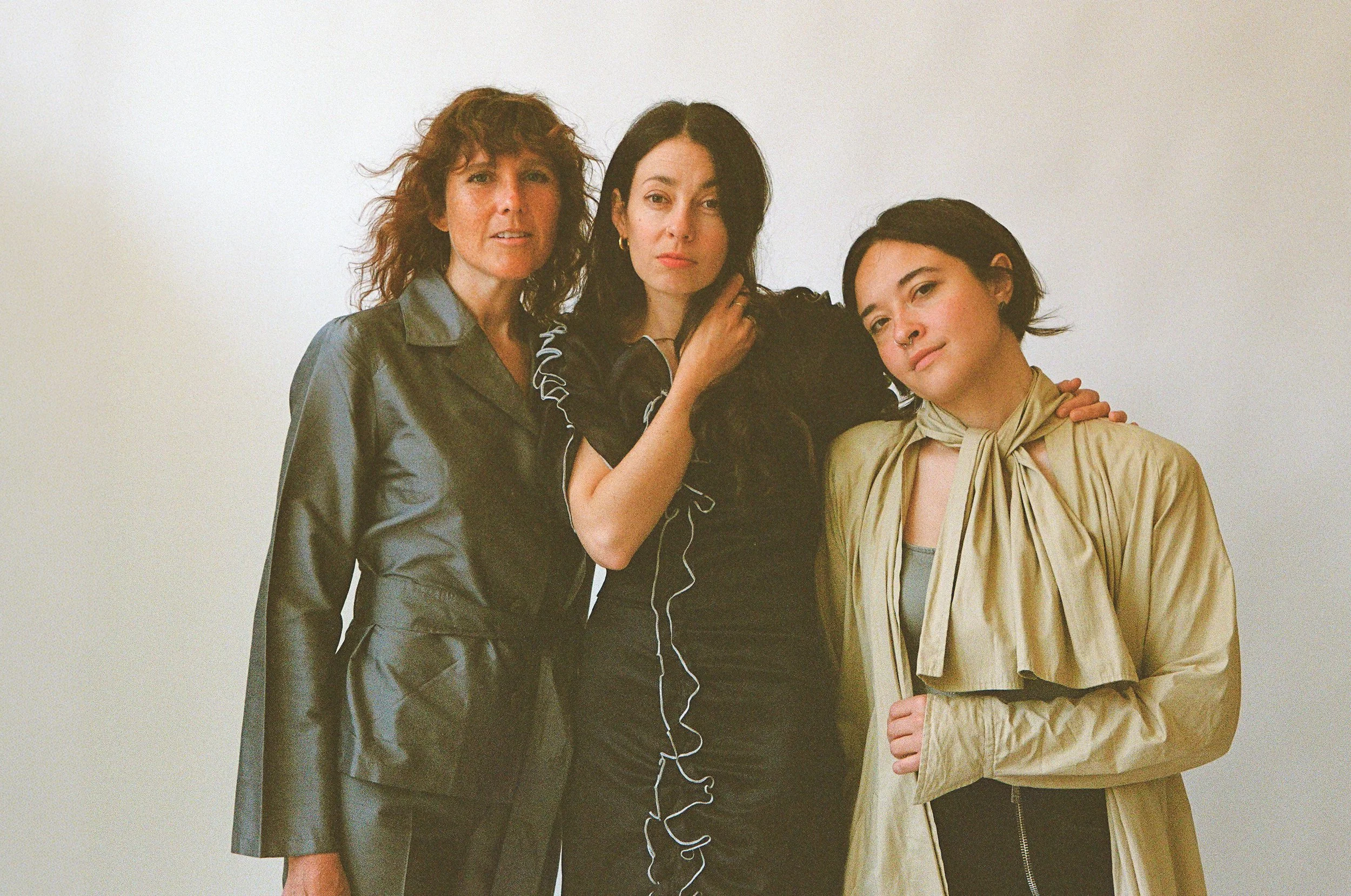
Whitney Johnson, Lia Kohl, Macie Stewart
Whitney Johnson, Lia Kohl, and Macie Stewart are a trio of improvisers individually rooted in deep sound exploration, multi-disciplinary composition, and all manner of cross-genre collaboration. The musical ground covered by their solo practices is correspondingly expansive, and their individual recording and performance credits read as a veritable who’s who, ranging from DIY darlings to household names of experimental avant-garde, electronic, indie rock, and more.
Their collective sound is based in improvised performance—automatic, intuitive composition via their three voices and three string instruments: viola, cello, and violin, respectively. Influences here are vast, dispatched with more playful ease than a trio of string instruments is typically approached with, and just as likely to be found in the cloud-obscured mountains of Donegal, the low-rent cacophony of a midwestern basement, or the revelatory expanse of the Nurse With Wound list as in the storied halls of the academy.
As a recording unit, the trio hones and transforms their performance concept with careful post-production, using multiple tape machines and outboard effects to reimagine their improvised material into meticulously crafted compositions. It’s all a response to the spaces they are collectively engaged with, and the use of a highly physical medium like analog tape deepens that spatial engagement with striking, organically psychedelic results.
INDIVIDUAL BIOS:
Based in Chicago, Whitney Johnson composes, performs, and installs multi-channel sound with viola, sine waves, Max/MSP, organ, synthesizers, vocalization, tape looping, and field recording. As artist-in-residence at Elektronmusikstudion (EMS) in Stockholm and Inkonst in Malmö, Sweden, she composed sine waves, marimba, viola, ARP Odyssey synthesizer, and Halldorophone into a multi-channel performance-installation and her latest LP, Hav (2024, Drag City). As Matchess, the Stena cassette (2024, Drag City) embodies an alter ego to join the cult of Hermaphroditus in Cypriot and Greek antiquity.
Recent performance-installations FIAT (2025, Indexical, Roulette Intermedium and 2023, Forecast Platform Berlin), The Tuning of the Elements (2023, Renaissance Society of the University of Chicago), Death in Trafo (or, The Crater) (2023, Logan Center for the Arts), Huizkol (2020, Lampo), and Fundamental 256 Hz (2019–2022, worldwide) consider the possibility of brainwave entrainment, an alternative healing technique using binaural beats to induce relaxed or energized mental states.
In tandem with her sound practice, she received her doctorate in the sociology of sound from the University of Chicago in 2018. In 2022, she completed a postdoctoral research fellowship on sound and technology in the Centre for Gender Research at Uppsala Universitet, Sweden, and she is an artist-in-residence at Q-O2 Brussels in 2025. She is currently Assistant Professor of Art and Technology/Sound Practices at the School of the Art Institute of Chicago.
***
Lia Kohl is a composer and sound artist based in Chicago. Trained as a cellist, she also incorporates synthesizers, field recordings, toy instruments and radios into her work, searching for a balance between virtuosity and curiosity. She gravitates towards sound practices which reveal and speak to their time and place: field recording, improvisation, radio broadcast and transmission. She often focuses on mundane or pedestrian sounds – sounds which often go unnoticed or under-documented, searching for the profound, unknown, and beautiful in everyday life.
She performs as a soloist, a collaborator and composes works for ensembles. She has presented work and performed at the Art Institute of Chicago, the Museum of Contemporary Art Chicago, The Renaissance Society, Union Station Chicago, Eckhart Park Pool, and Big Ears Festival. She has created sound installations for Experimental Sound Studios' Audible Gallery and Roman Susan Art Foundation. She has been a resident artist at ACRE, Vashon Artist Residency, High Concept Labs, dfbrl8r Performance Art Gallery, Mana Contemporary, Stanford University, and Mills College and a Transmission Art Fellow at Wave Farm.
NPR music describes her music as “true poetry” and the Chicago Tribune calls her “a master of the form”. She has releases on Drag City, International Anthem, Moon Glyph, Longform Editions, and American Dreams Records. She tours nationally and internationally.
***
Macie Stewart is a musician and multi-disciplinary artist based in Chicago, IL. Heralded for their versatility, Stewart works with piano, violin, guitar, voice, and synthesizers, effortlessly traversing styles and scenes. Stewart is a distinguished, go-to collaborator who Pitchfork credits with “making some of the best tracks of the past five years transcendent.”
As a composer, Stewart’s work continues to dissolve the boundaries between disciplines. Aside from her debut record, Mouth Full of Glass released in 2021 on Orindal Records and re-released in 2022 on Full Time Hobby Records—Macie also composed a piece for Hubbard Street Dance’s film, Half of Us, alongside Sima Cunningham in 2021. That same year, they worked with Cunningham and Alex Grelle to produce a performance piece paying homage to Kate Bush.
In 2022, Stewart/Cunningham composed the score for a 50-piece orchestra premiering the Pacific Northwest Ballet’s Before I Was. And in 2023, choreographer Robyn Mineko Williams enlisted Stewart to create a sound installation for her dreamlike performance piece, Hisako House. Most recently, Stewart was invited to compose a site-specific piece for the ESS Florasonic Installation at Lincoln Park Conservatory. As part of the longest-running sound installation in North America, their twenty-minute composition titled The World Doubles in Size played in the conservatory’s fern room from September through November of 2024.
In March of 2025, Stewart released When the Distance is Blue via International Anthem, an album that “folds prepared piano, string quartet, and field recordings into elegant expressions of nameless longing” (Pitchfork), and is “at once lulling and eerie” (New York Times).
Now Available
BODY SOUND
Now Available
BODY SOUND [STONE PIECE]